


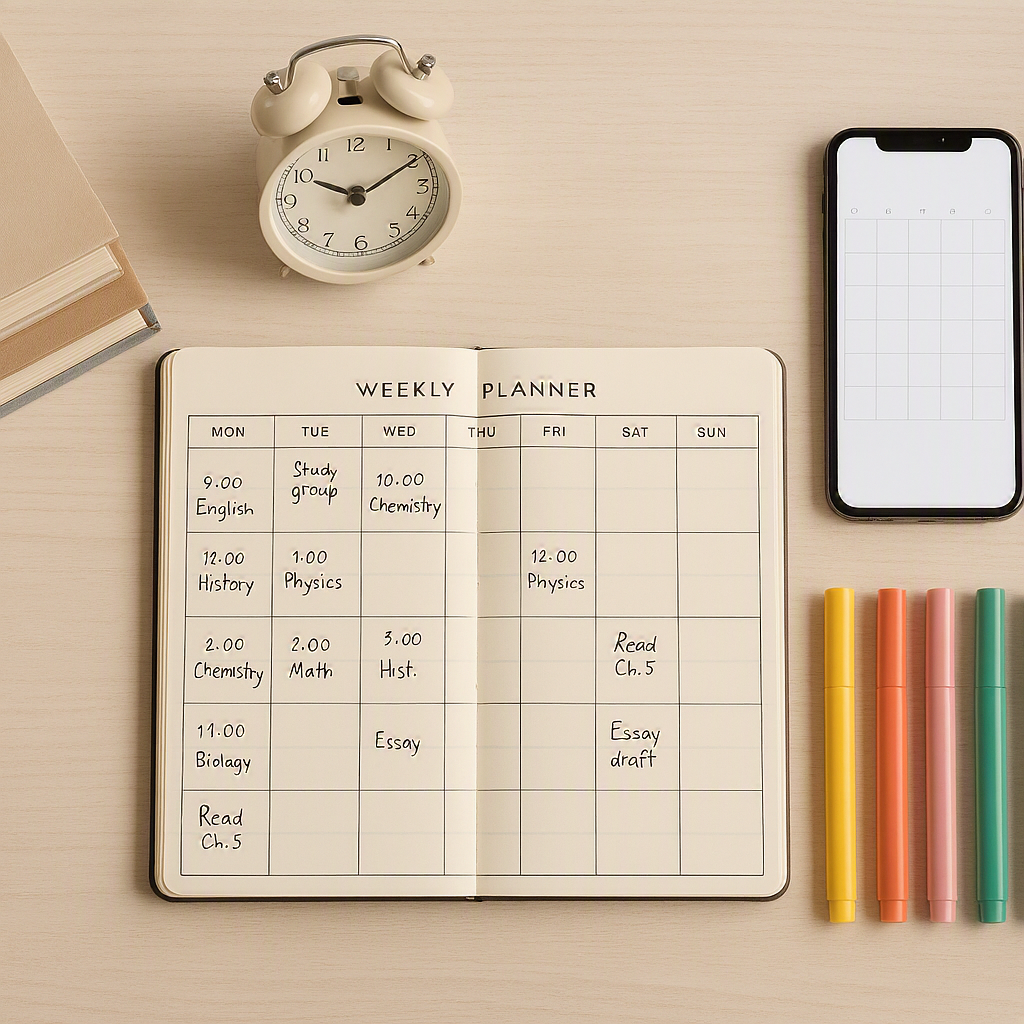
Time Management Strategies for Student Success: How to Study Smarter, Not Harder
Proven techniques to organize your study schedule, reduce stress, and boost academic performance
Discover proven time management strategies for students to study smarter, reduce stress, and boost grades with simple daily planning techniques.
Time Management Strategies for Student Success: How to Study Smarter, Not Harder
Did you know that learners spend over 60% of their academic hours without a clear plan, yet still feel completely overwhelmed? This common struggle proves that your frustration usually stems from a lack of organization rather than a lack of available hours. You possess the potential to excel, but you need the right framework to unlock it.

Adopting effective time management strategies for students can completely transform your educational experience. By shifting your focus toward a structured workflow, you turn chaotic days into productive sessions. This approach allows you to study smarter not harder, ensuring you achieve better results with significantly less stress.
Embracing these habits sets the stage for long-term academic growth and personal development. You are capable of mastering your workload while maintaining a healthy balance. Let us explore how to refine your daily routine and reclaim your focus starting today.
Key Takeaways
- Recognize that organization is more important than raw effort.
- Replace aimless studying with a clear, actionable plan.
- Reduce academic stress by optimizing your daily workflow.
- Focus on high-impact tasks to improve your overall grades.
- Build sustainable habits that support your long-term success.
Why Mastering Time Management is Essential for Your Academic Journey
You can transform your academic experience by simply taking control of your daily hours. When you implement effective time management strategies for students, you stop reacting to deadlines and start proactively shaping your success. This shift in mindset allows you to balance rigorous coursework with your personal well-being, ensuring you stay healthy while you learn.
https://www.youtube.com/watch?v=rUO8Qvcs7cY
Mastering your schedule is not just about finishing assignments; it is about creating a sustainable lifestyle. By organizing your tasks, you gain the freedom to pursue hobbies, exercise, and socialize without the constant guilt of unfinished work. This balance is the key to avoiding burnout during intense semesters.
One of the most significant benefits of staying organized is exam stress reduction. When you plan your study sessions well in advance, you eliminate the frantic, last-minute panic of cramming. Consider these primary advantages of staying on top of your calendar:
- Higher academic performance through consistent, focused study habits.
- Improved mental health by reducing the anxiety associated with looming deadlines.
- Increased confidence as you meet your goals with time to spare.
- More opportunities for deep learning rather than just memorizing facts for a test.
Ultimately, taking control of your time leads to better grades and a more rewarding college experience. You deserve to feel in command of your education rather than overwhelmed by it. Start small, stay consistent, and watch how your productivity flourishes.
Core Time Management Strategies for Students to Boost Productivity
Achieving your academic goals requires more than just hard work; it demands a strategic approach to your daily schedule. By refining your time management for students, you can turn chaotic study sessions into periods of high efficiency. Adopting structured frameworks allows you to reclaim your day and reduce unnecessary stress.

Implementing the Time Blocking Method
The time blocking method is a powerful way to organize your day by assigning specific tasks to dedicated hours. Instead of working from a vague to-do list, you create a visual map of your time. This prevents procrastination because you know exactly what to focus on at any given moment.
For example, your schedule might look like this: 9:00 AM to 10:30 AM is reserved for deep work on your history essay. From 10:30 AM to 11:00 AM, you handle administrative tasks like checking emails. By treating these blocks as non-negotiable appointments, you ensure that your most important work gets done first.
Mastering the Pomodoro Technique for Sustained Focus
To maintain high cognitive energy throughout your study sessions, you should utilize the pomodoro technique. This method relies on a simple cycle: you work with intense focus for 25 minutes, followed by a short 5-minute break. These brief intervals act as a mental reset, preventing burnout during long study days.
After completing four of these cycles, you can reward yourself with a longer break of 15 to 30 minutes. This rhythm keeps your brain sharp and prevents the fatigue that often leads to distraction. When you combine this with your daily blocks, you create a highly effective framework for consistent academic output.
Prioritizing Your Workload to Study Smarter Not Harder
Mastering the art of prioritization allows you to study smarter not harder every single day. When you organize your time effectively, you reduce stress and improve your overall academic performance. By focusing on what truly matters, you create space for deeper learning and better retention.
Effective study planning tips often center on the idea of energy management rather than just time management. You should align your most demanding cognitive tasks with the times of day when your focus is at its peak. This simple shift prevents burnout and ensures that you make consistent progress toward your goals.

Applying the Priority Rule for Difficult Subjects
The Priority Rule suggests that you tackle your most challenging subjects first. When you start your day with the hardest material, you utilize your freshest mental energy. This approach ensures that complex concepts receive the attention they deserve before fatigue sets in.
"The key is not to prioritize what's on your schedule, but to schedule your priorities."
By addressing difficult topics early, you avoid the common trap of procrastination. You will find that once the hardest task is complete, the rest of your study session feels much more manageable. This momentum is vital for maintaining a positive mindset throughout your academic journey.
The Daily Planning System:
3 Tasks, 2 Revisions, 1 Practice
To maintain a balanced workload, adopt a structured daily system. This method involves identifying exactly 3 primary tasks, 2 revision topics, and 1 practice session. This framework keeps your objectives clear and prevents you from feeling overwhelmed by a massive to-do list.
| Category | Description | Goal |
|---|---|---|
| Primary Tasks | New material or major assignments | Deep understanding |
| Revision Topics | Reviewing past notes or chapters | Long-term retention |
| Practice Session | Solving problems or quizzes | Active application |
Using these study planning tips helps you stay consistent without sacrificing your well-being. By limiting your daily output to these specific categories, you ensure that you are not just busy, but productive. This disciplined approach is the ultimate way to study smarter not harder while achieving your academic potential.
The Dangers of Multitasking and How to Avoid It
You might feel productive when juggling multiple assignments, yet your brain is actually struggling to keep up. Many students believe that switching between subjects helps them cover more ground, but this habit often leads to fragmented attention. When you constantly jump from math problems to history notes, your brain loses the deep focus required for true learning.
This constant switching creates a cognitive tax that lowers your overall performance. By learning how to manage study time effectively, you can avoid this trap and improve your retention rates. Implementing better productivity tips for students will allow you to finish your work with much greater accuracy and less mental fatigue.

To break the cycle of multitasking, try dedicating specific blocks of time to a single subject. When you commit to one task, you allow your mind to enter a state of flow where complex concepts become easier to grasp. This simple shift in your routine is one of the most effective ways to boost your academic results.
Consider the following comparison to see why single-tasking is superior for your brain:
| Feature | Multitasking | Single-Tasking |
|---|---|---|
| Focus Level | Fragmented and shallow | Deep and sustained |
| Information Retention | Low and inconsistent | High and long-term |
| Task Completion Speed | Slow due to switching | Fast and efficient |
| Stress Levels | High and overwhelming | Low and manageable |
As you refine your approach, remember that quality always beats quantity. Using these productivity tips for students will help you reclaim your schedule and reduce unnecessary stress. Mastering how to manage study time by focusing on one goal at a time is the ultimate secret to working smarter, not harder.
Common Time Management Mistakes Holding You Back
Many students unknowingly sabotage their own success by repeating common time management mistakes. Even when you feel busy, your output might not reflect the effort you put in. Improving time management for students requires an honest look at the habits that keep you from reaching your full potential.

The Pitfalls of Random Studying and No Schedule
Relying on random study sessions is a recipe for inconsistency. When you study without a clear plan, you often waste time deciding what to work on rather than actually learning the material. This lack of structure leads to fragmented knowledge and unnecessary stress.
Instead of waiting for inspiration to strike, you should treat your study time like a professional appointment. A consistent schedule helps you build momentum and ensures that you cover all necessary topics before deadlines arrive.
Managing Digital Distractions and Procrastination
Your smartphone is often the biggest enemy of deep focus. Constant notifications pull your attention away from complex tasks, making it difficult to enter a state of flow. Procrastination often stems from this cycle of digital interruption, where you delay difficult work to seek quick dopamine hits from social media.
To combat this, try placing your phone in another room during study blocks. By removing the temptation, you reclaim your ability to concentrate on challenging subjects for longer periods.
The Importance of Taking Regular Breaks
Many students believe that studying for hours without stopping is the key to high grades. In reality, this approach often leads to mental fatigue and burnout. Your brain requires downtime to process information and consolidate what you have learned.
Skipping breaks is a major error in effective time management for students. Incorporating short, intentional pauses allows you to return to your desk with renewed energy and sharper focus.
| Habit Type | Common Mistake | Productive Alternative | Expected Outcome |
|---|---|---|---|
| Planning | Random studying | Structured scheduling | Consistent progress |
| Focus | Digital distractions | Deep work sessions | Higher retention |
| Energy | Skipping breaks | Scheduled rest | Reduced burnout |
Designing Your Ideal Student Daily Schedule
Designing an effective schedule allows you to master your time and energy. By aligning your most demanding academic tasks with your natural energy peaks, you create a sustainable rhythm for success. A well-crafted student daily schedule acts as a roadmap, ensuring that every hour of your day serves your long-term goals.

Morning Routine for Peak Cognitive Performance
Your morning sets the tone for the entire day. Start by tackling your most challenging subjects when your brain is fresh and alert. This is the perfect time to utilize the time blocking method to dedicate uninterrupted focus to complex concepts or difficult assignments.
Avoid checking emails or social media immediately upon waking. Instead, prioritize deep work to capitalize on your peak cognitive performance. By securing these wins early, you build confidence and momentum that carries you through the rest of your day.
Afternoon Study Blocks and Academic Momentum
As the day progresses, your energy levels may naturally shift. Use your afternoon to handle collaborative projects, review notes, or complete lighter administrative tasks. Maintaining academic momentum is easier when you break your afternoon into manageable segments.
Try to schedule shorter, high-intensity study sessions during this time. If you feel your focus waning, switch to a different subject or engage in active recall exercises. This variety keeps your mind sharp and prevents the burnout associated with long, monotonous study sessions.
Evening Review and Nightly Preparation
The final part of your day should focus on consolidation and planning. Spend thirty minutes reviewing what you learned to reinforce your memory. This simple habit is a powerful way to ensure that your hard work sticks.
After your review, prepare your workspace for the next morning. Organizing your materials and finalizing your to-do list reduces decision fatigue when you wake up. By closing your day with intention, you ensure that your time blocking method remains effective and your student daily schedule stays on track for consistent growth.
A Real-Life Sample Study Plan for High Achievers
A consistent student daily schedule is the secret weapon of top-performing learners. By organizing your hours with intention, you create a rhythm that minimizes stress and maximizes output. This approach allows you to move through your academic tasks with clarity and purpose.
When you look at effective study planning tips, you will notice that high achievers prioritize deep work during their peak energy hours. They do not leave their success to chance; instead, they map out their day to ensure every minute counts. This structure helps you avoid the trap of aimless studying.

Consider this sample routine designed to keep you on track from sunrise to sunset. You can adapt these blocks to fit your specific class times and personal commitments.
| Time Block | Activity | Focus Area |
|---|---|---|
| Morning | Deep Work | Complex Concepts |
| Afternoon | Active Recall | Practice Problems |
| Evening | Review | Consolidation |
"Success is the sum of small efforts, repeated day in and day out."
Your morning should be reserved for your most challenging subjects when your brain is fresh. By the afternoon, shift your focus to active recall and practice tests to solidify your knowledge. These study planning tips are designed to help you maintain momentum without burning out.
Finally, use your evening for a quick review of the day's material and preparation for tomorrow. This nightly habit ensures you wake up with a clear plan, keeping your student daily schedule both manageable and highly effective. Consistency is the bridge between your current habits and your future academic goals.
Tools and Techniques to Enhance Your Study Efficiency
Beyond simple willpower, the right digital and physical tools can transform how you manage your academic workload. Integrating these resources into your routine is one of the most effective productivity tips for students looking to gain an edge. By choosing the right support systems, you can maintain a clear overview of your responsibilities while reducing mental fatigue.
Many high-achieving learners rely on the pomodoro technique to maintain high levels of concentration during long study sessions. Digital apps like Forest or Focus Keeper allow you to automate these intervals, ensuring you take necessary breaks without losing your momentum. These tools provide a visual representation of your progress, which helps you stay motivated throughout the day.

If you prefer a tactile approach, physical planners remain a powerful way to map out your academic goals. Combining a paper planner with digital website blockers, such as Freedom or Cold Turkey, creates a balanced environment that minimizes digital distractions. Blocking distracting websites during your deep work sessions is essential for protecting your focus.
To help you decide which resources fit your learning style, consider the following comparison of common study tools. Each category offers unique benefits for managing your time effectively.
| Tool Category | Primary Benefit | Best For |
|---|---|---|
| Digital Timers | Automated focus intervals | The pomodoro technique |
| Website Blockers | Eliminates online distractions | Deep work sessions |
| Physical Planners | Visual task management | Long-term goal tracking |
| Note-taking Apps | Cloud-based organization | Quick review and storage |
Ultimately, the best productivity tips for students involve experimenting with these tools to see what works for your specific needs. You should aim to create a system that feels natural and supportive rather than restrictive. By consistently using these techniques, you will find it much easier to stay on track and achieve your academic goals.
Overcoming Procrastination and Maintaining Long-Term Motivation
Learning how to manage study time effectively is the ultimate antidote to the cycle of procrastination that plagues many students. Often, you may feel that your desire to delay tasks stems from laziness, but it is usually a symptom of feeling overwhelmed by the sheer size of your academic workload.
When you break large projects into tiny, manageable actions, the fear of starting begins to fade. Consistency is far more powerful than intensity when you are trying to build long-term habits. By focusing on small wins, you create a positive feedback loop that keeps your momentum high throughout the semester.

Self-compassion plays a vital role in your success. If you have a bad day or miss a deadline, do not let it derail your entire progress. Instead, analyze what went wrong, adjust your approach to how to manage study time, and start fresh the next morning with a clear vision of your goals.
Maintaining motivation requires you to connect your daily tasks to your long-term academic aspirations. Remind yourself why you chose your field of study whenever you feel the urge to procrastinate. This mental shift helps you view challenging coursework as a necessary step toward your future career rather than a burden.
To help you stay on track, consider the following strategies for addressing common procrastination triggers. Understanding how to manage study time involves recognizing these patterns early and applying the right solution immediately.
| Procrastination Trigger | Psychological Impact | Recommended Action |
|---|---|---|
| Fear of Failure | High anxiety and avoidance | Focus on effort, not grades |
| Task Complexity | Feeling overwhelmed | Break into 15-minute chunks |
| Lack of Interest | Low engagement | Connect to personal goals |
| Perfectionism | Paralysis by analysis | Aim for "done" over "perfect" |
Conclusion
Your journey toward academic excellence relies on the habits you build today. Consistent application of these time management techniques creates a foundation for lasting success in your classes.
Prioritizing your tasks leads to significant exam stress reduction. You gain control over your workload by focusing on high-impact study sessions. This shift in perspective turns overwhelming deadlines into manageable goals.
Tools like Notion or Google Calendar help you track progress toward your degree. These resources support your ability to study smarter while keeping your schedule organized. You will notice a clear improvement in your grades as you refine your daily routine.
Commit to these small changes to see big results in your performance. A balanced approach to learning ensures you stay motivated throughout the semester. Your dedication to better habits now will pay off during every future test and project.
Take the first step by planning your next study block right now. You possess the power to transform your student life through intentional action. Embrace this path to achieve your goals with confidence and clarity.
FAQ
How can I begin to study smarter not harder today?
Why is time management for students so critical for mental health?
What is the most effective way to use the Pomodoro Technique?
How do I implement a daily planning system that actually works?
Can I really improve my grades by learning how to manage study time better?
Why should I avoid multitasking during my study blocks?
What are the most common time management mistakes I should avoid?
What tools do you recommend for organizing a student daily schedule?
How do I stay motivated when I feel like procrastinating?
Ready to Master Your Time and Achieve Academic Success?
Apply these time management strategies starting today, and watch your productivity transform. If you're looking for structured courses, expert tutoring, and personalized learning plans to support your academic journey, Edufluxa is here to help you every step of the way.

Admin
More from Admin

How to Create a Study Schedule ...
2 Jul 2026
Comments
Want new courses and tutor updates in your inbox?


Reply to Comment